Photo of Mark Furletti

Mark helps clients navigate regulatory risks posed by state and federal laws aimed at protecting consumers and small business, particularly in connection with credit, deposit, and payments products. He is a trusted advisor, providing practical legal counsel and advice to providers of financial services across numerous industries.

Yesterday, the Consumer Financial Protection Bureau (CFPB or Bureau) issued an “interpretive rule,” subjecting “Buy Now, Pay Later” (BNPL) transactions to provisions of Regulation Z applicable to “credit cards.” Among other things, this classification would require BNPL and other lenders to extend many of the same legal protections and rights to consumers that apply to traditional credit cards, including the rights to dispute charges and demand refunds for returned products, and, potentially, receive periodic statements. The Bureau claims its authority to issue this interpretive rule — in lieu of a formal rulemaking — stems from the Truth in Lending Act (TILA) and Regulation Z, and its general authority to issue guidance as set forth in § 1022(b)(1) of the Consumer Financial Protection Act of 2010.

Last week, the Consumer Financial Protection Bureau (CFPB or Bureau) filed a complaint against SoLo Funds, Inc., a fintech company operating a small-dollar, short-term lending platform. The CFPB alleges that SoLo Funds engaged in deceptive practices related to the total cost of loans, servicing, and collection of void and uncollectible loans in violation of the Consumer Financial Protection Act (CFPA) and engaged in providing consumer reports governed by the Fair Credit Reporting Act (FCRA) but failed to ensure the maximum possible accuracy of those consumer reports.

Yesterday, the U.S. Supreme Court issued its long-awaited decision in Community Financial Services Association of America, Limited (CFSA) v. Consumer Financial Protection Bureau (CFPB or Bureau) holding that the CFPB’s special funding structure does not violate the appropriations clause of the Constitution. The 7-2 majority held the Dodd-Frank Act, which provides the CFPB’s funding structure, satisfies the appropriations clause because it “authorizes the Bureau to draw public funds from a particular source — ‘the combined earnings of the Federal Reserve System’ — in an amount not exceeding an inflation-adjusted cap. And it specifies the objects for which the Bureau can use those funds — to ‘pay the expenses of the Bureau in carrying out its duties and responsibilities.’” The Supreme Court further found that the “Bureau’s funding mechanism [] fits comfortably within the historical appropriations practice …” Justices Samuel Alito and Neil Gorsuch dissented from the decision.

The U.S. Court of Appeals for the Ninth Circuit recently reversed a district court’s ruling, which had denied a motion to compel arbitration of Opportunity Financial (OppFi) on the basis that the arbitration clause was substantively unconscionable due to the choice of law provision in the loan agreement containing the arbitration clause. The Ninth Circuit vacated the decision and directed the district court to refer the matter to arbitration.

Yesterday, three trade organizations filed a complaint in Colorado federal court challenging H.B. 1229, Colorado’s effort to limit interest charges by out-of-state financial institutions, which is set to take effect on July 1, 2024. As discussed here, in June 2023, Colorado passed H.B. 1229, limiting certain charges on consumer loans and simultaneously opting Colorado out of §§ 521-523 of the Depository Institutions Deregulation and Monetary Control Act (DIDMCA). Sections 521-523 of DIDMCA empower state banks, insured state and federal savings associations and state credit unions to charge the interest allowed by the state where they are located, regardless of where the borrower is located and regardless of conflicting state law (i.e., “export” their home state’s interest-rate authority). However, § 525 of DIDMCA enables states to opt out of this rate authority with respect to loans made in the opt-out state.

We discussed the Consumer Financial Protection Bureau’s (CFPB or Bureau) credit card late fee proposed rule here 13 months ago, and today, the Bureau announced that it has finalized the rule (Final Rule) setting a safe harbor amount for late fees at $8 and eliminating the annual inflation adjustments to that safe harbor amount, for larger card issuers. Notably, due to industry pushback during the comment period, the Final Rule does not codify the proposal that late fees must not exceed 25% of the minimum payment. The Final Rule will take effect 60 days after publication in the Federal Register.

Can digital comparison-shopping operators or lead generators violate the Consumer Financial Protection Act (CFPA) by preferencing products or services based on financial benefit? According to today’s guidance issued by the Consumer Financial Protection Bureau (CFPB or Bureau), the answer to that question is yes. Specifically, according to the CFPB, operators of digital comparison-shopping tools can violate the CFPA’s prohibition on abusive acts or practices by steering consumers to certain products or services based on remuneration. Lead generators can also violate the CFPA if they steer consumers to one financial services provider over another based on compensation received. As is typical for the CFPB today, the Bureau has couched this guidance on its “abusive” authority under Dodd-Frank.

On February 23, the Consumer Financial Protection Bureau (CFPB or Bureau) released an order, dated November 30, 2023, establishing supervisory authority over installment lender World Acceptance Corp. The CFPB found that it had reasonable cause to determine that the conduct of World Acceptance “poses risks to consumers with regard to the offering or provision of consumer financial products or services,” and, therefore, the agency could exercise its supervisory powers over the company under the Consumer Financial Protection Act (CFPA). Notably, this is the CFPB’s first supervisory designation order in a contested matter, and, as permitted by the Bureau’s amended rules governing this process, the Bureau chose to publicize its decision (and issue a press release about it).
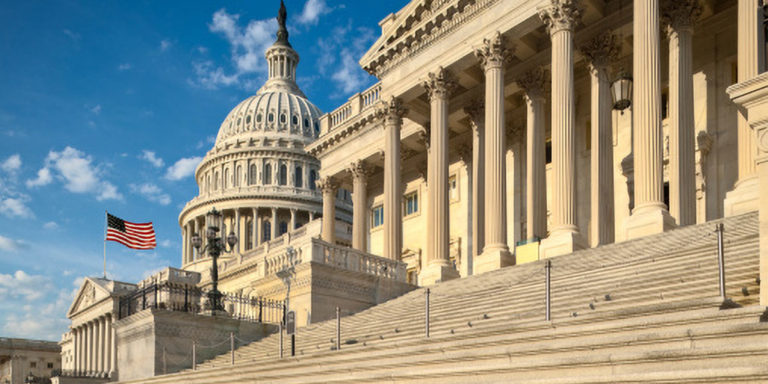
We are pleased to share our annual review of regulatory and legal developments in the consumer financial services industry. With active federal and state legislatures, consumer financial services providers faced a challenging 2023. Courts across the country issued rulings that will have immediate and lasting impacts on the industry. Our team of more than 140 professionals has prepared this concise, yet thorough analysis of the most important issues and trends throughout our industry. We not only examined what happened in 2023, but also what to expect — and how to prepare — for the months ahead.

Yesterday, the Consumer Financial Protection Bureau (CFPB or Bureau) issued a proposed rule with request for public comment to prohibit covered financial institutions from charging nonsufficient funds fees (NSF) for payment transactions that are instantaneously declined. The proposed rule would treat fees for transactions declined in real time to be unlawful under the Consumer Financial Protection Act.