To keep you informed of recent activities, below are several of the most significant federal and state events that have influenced the Consumer Finance Services industry over the past week:


To keep you informed of recent activities, below are several of the most significant federal and state events that have influenced the Consumer Finance Services industry over the past week:

On September 14, a federal district court in the Eastern District of Kentucky became the second court to issue an order granting, in part, a plaintiffs’ motion for a preliminary injunction enjoining the Consumer Financial Protection Bureau’s (CFPB or Bureau) from enforcing its final rule under § 1071 of the Dodd-Frank Wall Street Reform and Consumer Protection Act (Final Rule) against the plaintiffs and their members. (A discussion of the first injunction issued by a Texas federal court can be found here.) The injunction in The Monticello Banking Company v. CFPB will dissolve if the U.S. Supreme Court reverses the Fifth Circuit in the Community Financial Services Association (CFSA) v CFPB case, which found the CFPB’s funding structure unconstitutional and, therefore, rules promulgated by the Bureau invalid.

As U.S. consumer solar energy use increases, so does potential exposure under state consumer protection statutes. A recent decision by the California Court of Appeals in the case of Hagey v. Solar Service Experts, LLC highlights the potential pitfalls for solar energy providers and their collections agents.

On September 14, the Consumer Financial Protection Bureau (CFPB or Bureau) released a report on Tuition Payment Plans in Higher Education. Ninety-eight percent of colleges now allow students to pay for their education in installments using tuition payment plans. Tuition payment plans have a wide range of structures and may be managed by the schools or administered by third-party payment processors. Typically, tuition payment plans are interest-free, but, according to the CFPB, many charge enrollment fees, late fees and returned payment fees. The Bureau asserts that these fees can create a high cost of credit. Specifically, the CFPB states that when the amount borrowed is low and the enrollment fee is high, students can face annual percentage rates as high as 237%.

On September 7, the U.S. District Court for the Eastern District of Michigan granted summary judgment in the defendant’s favor finding that the plaintiff had not suffered a concrete injury and therefore lacked standing to assert a claim under the Fair Debt Collections Practices Act (FDCPA).

On September 7, the Consumer Financial Protection Bureau (CFPB) released an issue spotlight focusing on the role that mobile device operating systems play in determining consumer’s payment options. According to the CFPB, “[g]iven the continued shift toward the use of contactless payments on mobile devices like smartphones and wearables, there is now readily available technology for consumers to securely make [point-of-sale (POS)] payments through different apps and services … Any restrictions imposed by the dominant operating systems … will have an outsized effect on access to payments systems and may hinder the development of a truly open ecosystem.”

On September 11, the Consumer Financial Protection Bureau (CFPB) announced that it issued a consent order against Tempoe, LLC, a nonbank consumer finance company, for alleged violations of the Consumer Financial Protection Act (CFPA), Consumer Leasing Act, and Regulation M. That same day, it was announced that Tempoe also entered into a parallel settlement with 41 states and the District of Columbia resolving a multi-state investigation into the same alleged misconduct. Under the terms of the CFPB consent order, Tempoe was banned from consumer leasing activity and must pay $1 million to the CFPB and $1 million to the states and jurisdictions participating in the settlement.
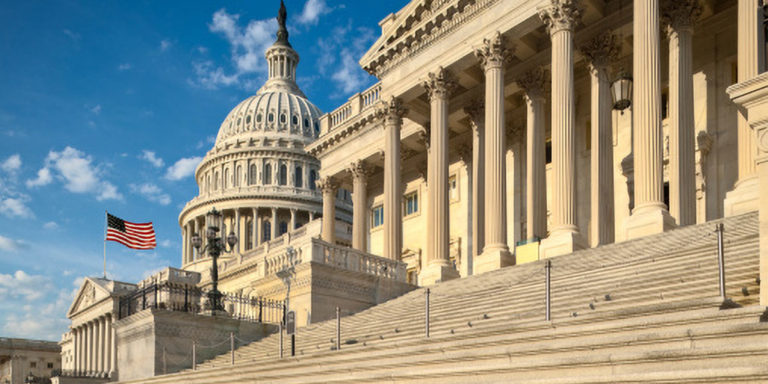
As discussed here, on July 7th the Consumer Financial Protection Bureau (CFPB), U.S. Department of Health and Human Services, and the U.S. Department of Treasury (collectively, the agencies) jointly issued a Request for Information (Request) seeking public comment on medical credit cards, loans, and other financial products used to pay for health care. On September 11, California Attorney General Rob Bonta sent a response letter to the agencies specifically addressing the Request’s questions regarding health equity concerns, consumer confusion, best practices for medical providers who offer medical payment products, and consumer protection. According to AG Bonta, “California is uniquely qualified to comment on the [Request] because it has enacted strong consumer protections to guard against patient harms from these products.”

Last year, a professional plaintiff obtained a judgment of over $828k in a case alleging 104 calls in violation of the Telephone Consumer Protection Act (TCPA). The district court in the Northern District of West Virginia found that the individual and corporate defendants failed to respond “fulsomely and accurately” to discovery requests and to comply with court orders pertaining to those requests. As a sanction, the district court entered a default judgment against them.

Parking Revenue Recovery Services, Inc. (PRRS), a collection company, was accused of violating the Colorado Fair Debt Collection Practices Act (CFDCPA) by allegedly illegally collecting or attempting to collect on parking fines that were already paid or were incurred by another vehicle owner. PRRS was also accused of allowing its collection license to expire on July 1, 2022, not submitting a new license application until December 2022, but still continuing to collect debts in the state in the interim.