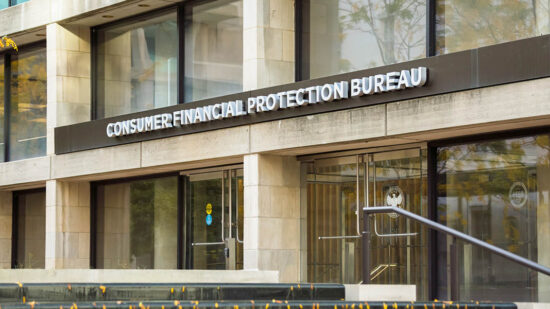
In this special crossover episode between Moving the Metal and The Consumer Finance Podcast, Brooke Conkle, Chris Capurso, and Chris Willis analyze the first 100 days of the second Trump administration, focusing on its impact on the auto-finance industry. They discuss the anticipated enforcement slowdown by the Consumer Financial Protection Bureau (CFPB), unexpected halts in supervisory activities, and leadership changes at the Federal Trade Commission and CFPB. The conversation highlights the administration’s focus on consumer fees, the evolving role of state regulators, and shifts in discrimination theories impacting compliance practices. This episode provides insights into strategic regulatory changes and offers guidance for navigating the complexities of the auto-finance sector in 2025.

Today, the Consumer Financial Protection Bureau (CFPB or Bureau) published in the Federal Register an interim final rule extending compliance dates for its 2023 small business lending rule under the Equal Credit Opportunity Act (Regulation B) (Final Rule) This extension comes in response to court orders in ongoing litigation, affecting the timeline for financial institutions to comply with data collection requirements for women-owned, minority-owned, and small businesses.

On June 12, the U.S. Court of Appeals for the Fifth Circuit issued a significant opinion in the case involving Guardian Flight, LLC and Med-Trans Corporation, two air ambulance providers, against the defendant insurance company. This case centered around the enforcement of Independent Dispute Resolution (IDR) awards under the No Surprises Act (NSA), a law enacted in 2022 to protect patients from unexpected medical bills from out-of-network providers during emergencies.

On June 12, the U.S. District Court for the Northern District of Illinois denied the joint motion by the Consumer Financial Protection Bureau (CFPB or Bureau) and Townstone Financial, Inc. to vacate the Stipulated Final Judgment and Order previously entered in the CFPB’s enforcement action against the mortgage lender, calling the CFPB’s attempt to refund Townstone’s civil money penalty for alleged redlining practices “breathtaking.” This decision comes after allegations by the current CFPB of misconduct related to the case under former CFPB leadership.

On March 13, New York State introduced proposed legislation titled the Fostering Affordability and Integrity Through Reasonable Business Practices Act (FAIR Act). The proposed legislation seeks to broaden the scope of consumer protection from deceptive business practices currently available under existing law by amending § 349 of the General Business Law (GBL). If enacted, the FAIR Act would provide individuals, small businesses, and non-profit organizations with greater legal recourse at the state level and target a wider range of alleged harmful conduct, including “unfair” and “abusive” business practices.

In response to the Federal Communications Commission’s (FCC) request for input on unnecessary compliance burdens, the debt collection industry, led by ACA International, is advocating for significant reforms to the Telephone Consumer Protection Act (TCPA). Their primary focus is on eliminating rules that impose undue compliance burdens and conflict with existing debt collection regulations. Key proposals include the revocation of the “Revoke All” rule, restoration of the Established Business Relationship (EBR) exemption, and harmonization of TCPA rules with the Fair Debt Collection Practices Act (FDCPA).

In this special crossover episode between FCRA Focus and The Consumer Finance Podcast, Kim Phan, Dave Gettings, Chris Willis, and Cindy Hanson explore the recent withdrawal of Consumer Financial Protection Bureau (CFPB) guidance affecting the Fair Credit Reporting Act (FCRA). This episode provides a comprehensive analysis of how these changes impact key areas such as preemption, background screening, permissible purpose, artificial intelligence, and state attorneys general enforcement actions. The discussion highlights the implications for consumer reporting agencies, furnishers, end-users, and the broader regulatory landscape, offering valuable insights for professionals navigating these evolving challenges. Tune in to understand the potential shifts in compliance and enforcement.

On June 5, the U.S. Supreme Court dismissed a writ of certiorari as improvidently granted, leaving unresolved a significant question regarding class-action certification under Federal Rule of Civil Procedure 23. The question presented (and left unanswered by the majority) in Laboratory Corporation of America Holdings (Labcorp) v. Davis was whether a federal court may certify a damages class that includes both injured and uninjured class members. The dismissal has sparked considerable debate, particularly highlighted by Justice Kavanaugh’s dissent, which provides a compelling argument against the court’s dismissal.