
On June 12, the Supreme Court of Appeals of West Virginia reversed a Circuit Court ruling and stated that a high volume of telephone calls from a debt collector to a consumer, absent any evidence the debt collector placed the calls with an intent to annoy, abuse, oppress, or threaten the consumer, is not sufficient
CFPB Updates Its Planned Overhaul of Acceptable Debt Collection Practices
In July of 2016, the Consumer Financial Protection Bureau released an outline of new rules targeting third-party debt-collection operations. The new rules targeted various areas including: Debt validation, Limits on Contact, Consumer Disputes, and Deceased Consumers. At the time, the CFPB stated it planned to release rules relevant to first-party creditors at a later
FTC Obtains Judgments Against Defendants Who Initiated Billions of Illegal Robocalls
On May 31, a California Federal District Court approved default judgments against ten defendants for violations of the Federal Trade Commission Act, 15 U.S.C. § 45 et seq., (“FTC Act”), and Telemarketing and Consumer Fraud and Abuse Prevention Act, 15 U.S.C. § 6105 et seq., (“Telemarketing Act”). The case is Federal Trade Commission v. Aaron
Insurance Company Settles Nationwide TCPA Class Action for $4.25M
On May 31, plaintiffs Jim Youngman and Robert Allen filed a motion for preliminary approval of class action settlement for their pending Telephone Consumer Protection Act action against Florida-based insurance company A&B Insurance and Financial Inc. The case is Youngman v. A&B Insurance and Financial, Inc., No. 6:16-cv-01478-CEM-GJK (M.D. Fla. May 18, 2017).
Credit Score Attached to Collection Action Complaint Violates the FCRA and FDCPA, Contends New Putative Class Action Complaint
According to a new class action Complaint filed in the United States District Court for the Western District of Wisconsin, Discover Bank (“Discover”) and Kohn Law Firm S.C. (“Kohn”) violated the Fair Credit Reporting Act (FCRA) and Fair Debt Collection Practices Act (FDCPA) by publishing consumers’ credit scores as part of state court collection actions
Join Us at the 2017 ACA International Convention & Expo in Seattle July 16-18
We are pleased to announce that Troutman Sanders partners David Anthony and Chad Fuller will be a featured speaker at the 2017 ACA International Convention & Expo in Seattle at the Washington State Convention Center on July 16-18.
David will discuss “Debt Collection Litigation Management Best Practices,” where he will focus on litigation management best
TCPA Is Not Dead Yet – Court Trebles Eight Figure TCPA Award While World Awaits ACA Decision
While the world eagerly awaits the D.C. Circuit’s forthcoming ruling on the proper interpretation of the Telephone Consumer Protection Act (TCPA), a recent federal court ruling imposing tens of millions of dollars of liability is a reminder of the risks associated with outbound calling activities and of the stakes at play in the ACA International
Favorable Decision Rendered in “Current Account Balance” Case
On May 18, the Southern District of New York rendered a long–awaited opinion on “current account balance” cases, holding that current balances referenced in collection letters, with no mention of accruing interest or fees, do not violate Section 1692e of the Fair Debt C
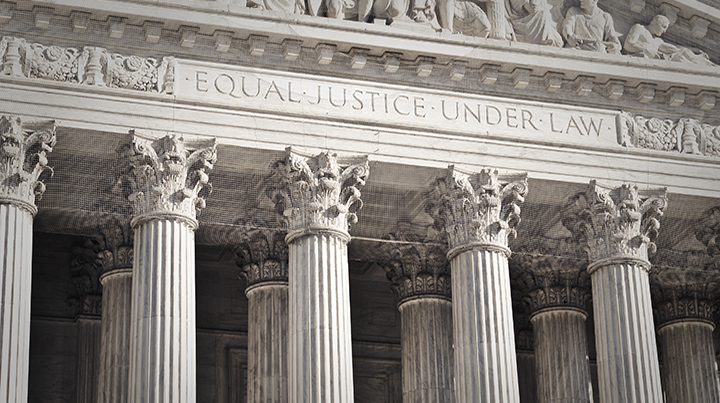
Supreme Court Rules That Filing a Proof of Claim on a Time-Barred Debt Does Not Violate the FDCPA
On May 15, 2017, the United States Supreme Court ruled that the Eleventh Circuit erred when it found a debt buyer liable under the Fair Debt Collection Practices Act for filing proofs of claim in bankruptcy on debts that had become time-barred. A copy of the Court’s opinion can be found here.
Background
In
U.S. Supreme Court Scoffs at Kentucky Supreme Court’s Decision to Disregard Federal Arbitration Act
On May 15, the United States Supreme Court reversed and remanded a state court decision that invalidated an arbitration agreement. In a visceral 7-1 decision, the Supreme Court sent a clear message to Kentucky that the state cannot circumvent the Federal Arbitration Act (“FAA”) merely because the court does not like arbitration clauses.
In Kindred