Today, the Federal Communications Commission (FCC) issued an order extending the effective date of certain parts of § 64.1200(a)(10) of its rules under the Telephone Consumer Protection Act (TCPA) to April 11, 2026.


Today, the Federal Communications Commission (FCC) issued an order extending the effective date of certain parts of § 64.1200(a)(10) of its rules under the Telephone Consumer Protection Act (TCPA) to April 11, 2026.

To keep you informed of recent activities, below are several of the most significant federal and state events that have influenced the Consumer Financial Services industry over the past week.

In a recent decision from the U.S. District Court for the Northern District of Indiana, the court granted a motion to dismiss in favor of a debt collection law firm and one of its attorneys who were not licensed as debt collectors in Indiana. The court found that a failure to be licensed did not provide for a private right of action under state law and did not violate the Fair Debt Collection Practices Act (FDCPA).

The Conference of State Bank Supervisors (CSBS), a nationwide organization of state banking and financial regulators from all 50 states, the District of Columbia, and U.S. territories, has raised significant concerns regarding the current draft of the Stablecoin Transparency and Accountability for a Better Ledger Economy (STABLE) Act.
To keep you informed of recent activities, below are several of the most significant federal and state events that have influenced the Consumer Financial Services industry over the past week.
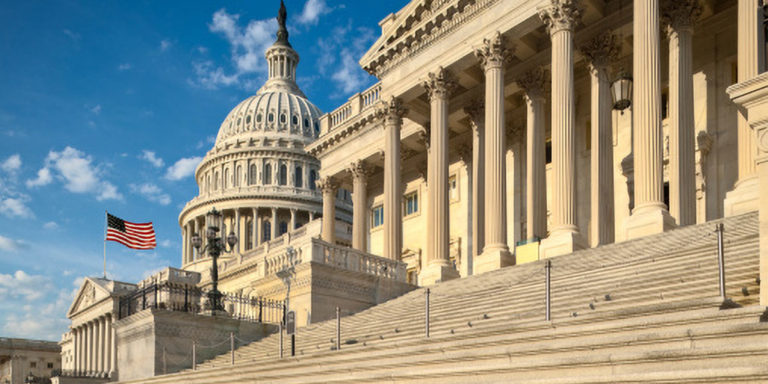
On March 28, the Consumer Financial Protection Bureau (CFPB or Bureau) was ordered by the U.S. District Court for the District of Columbia to reinstate its employees and resume its operations. This decision comes after the CFPB allegedly attempted to shut down its activities, leading to the National Treasury Employees Union (NTEU) filing a lawsuit questioning the legality of the shutdown. The court held that the CFPB’s actions to halt its operations and terminate its employees were not consistent with its statutory obligations under Title X of Dodd-Frank. As a result, the court granted a preliminary injunction requiring the CFPB to reverse its shutdown efforts, reinstate its workforce, and continue performing its statutory duties. On March 29, the Bureau filed its notice of appeal of the preliminary injunction.

Last Friday, the Federal Deposit Insurance Corporation (FDIC) announced the rescission of Financial Institution Letter (FIL-16-2022) and issued new guidance clarifying the process for FDIC-supervised institutions to engage in crypto-related activities. The new Financial Institution Letter (FIL-7-2025) represents a 180 degree turn from the prior Chairman’s position, which required prior notification and relevant information by banks seeking to engage in crypto-related activities.

On March 26, the U.S. Court of Appeals for the Fourth Circuit reversed a district court’s decision holding a credit union liable for a wire transfer in a business email compromise scam case where the credit union lacked “actual knowledge” of the mismatch between the account number and beneficiary.

In a surprising turn of events, the Consumer Financial Protection Bureau (CFPB or Bureau) and Townstone Financial, Inc. (Townstone) have jointly moved to vacate the Stipulated Final Judgment and Order previously entered in the CFPB’s enforcement action against the mortgage lender alleging redlining practices. This motion, filed on March 26, 2025, comes after significant allegations by the CFPB regarding the Bureau’s own handling of the case, which began in 2020 under the first Trump administration and continued under the Biden administration.

In a significant policy shift under the Trump administration, the new Federal Housing Finance Agency (FHFA) Director Bill Pulte issued an order on March 25, 2025 terminating special purpose credit programs (SPCPs) supported by the government sponsored enterprises, Fannie Mae and Freddie Mac (together, the GSEs). This directive, effective immediately, will significantly impact banks with mortgage-based SPCPs.