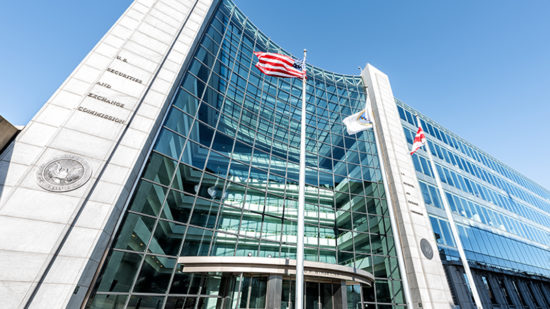
Shortly before the end of the year, two bills, introduced in the U.S. House of Representatives earlier in 2019, that seek to amend the Fair Credit Reporting Act (“FCRA”) were amended and reported out by the House Committee on Financial Services for consideration by the full House.

H.R. 3622, titled “Restoring Unfairly Impaired Credit

With the ever-changing case law surrounding the Telephone Consumer Protection Act, staying up to date with what cases are relevant and where courts stand on certain, very important definitions, can be an almost impossible task. Further, in the 28 years since the TCPA was enacted, the legislation has been considered outdated by many companies.

As

In Horia v. Nationwide Credit & Collection, Inc., the Seventh Circuit Court of Appeals overturned a district court’s decision dismissing the plaintiff’s second FDCPA lawsuit.

Consumer plaintiff Henry Horia received separate correspondence from Nationwide Credit regarding two debts owed to two different creditors, both of which had been assigned to Nationwide Credit in

Creditors and debt collectors are often held to high standards when it comes to consumer protection laws. On December 17, however, the United States Bankruptcy Court for the Northern District of Illinois issued a Memorandum Opinion in In re: Charles V. Cook, Sr., No. 1:14-bk-36424, evincing that debtors’ counsel can be subject to

In a recent decision, the United States Court of Appeals for the Second Circuit affirmed a district court’s ruling that a defendant lender and its property preservation company did not owe the plaintiff homeowner a duty to act to prevent theft or damage to his property. The case is Malick v. JP Morgan Chase Bank

In a recent decision, the United States District Court for the Southern District of New York found that the inclusion of a collection fee in a post-default collection letter sent by a debt collection company did not violate the Fair Debt Collection Practices Act.

In Ossipova v. Pioneer Credit Recovery, Inc., et al., No.

The United States District Court for the Middle District of Pennsylvania recently held that a pro se plaintiff failed to plead facts sufficient to demonstrate that an agency relationship existed. This holding reinforced the need for specificity in Telephone Consumer Protection Act claims that allege vicarious liability.

In Robert D. Kline v. Elite Medical Laboratories

In Dancel v. Groupon, Inc., No. 19-1831 (7th Cir. Oct. 9, 2019), the Seventh Circuit split with the Eleventh Circuit regarding jurisdictional discovery to prove federal subject matter jurisdiction under the Class Action Fairness Act (“CAFA”).

This case involved a claim brought by Christine Dancel regarding the unauthorized use of Dancel’s image in Groupon

On December 20, the Ninth Circuit affirmed the Washington district court’s decision that denied Huuuge, Inc.’s bid to arbitrate a proposed class action based on a browsewrap agreement. In Wilson v. Huuuge, Inc., No. 18-36017, 2019 U.S. App. LEXIS 37952 (9th Cir. Dec. 20, 2019), the Ninth Circuit held that “because Huuuge did not

The U.S. District Court for the Middle District of Florida has awarded summary judgment in favor of a furnisher on a consumer’s claims brought under the Fair Debt Collection Practices Act. The dispute arose out of credit reporting on the account. The plaintiff asserted that the furnisher violated credit reporting standards by inaccurately identifying