On July 14, the Office of the Comptroller of the Currency (OCC), the Board of Governors of the Federal Reserve System (the Board), and the Federal Deposit Insurance Corporation (FDIC) jointly issued a statement addressing the safekeeping of crypto-assets by banking organizations on behalf of their customers. This announcement clarifies how existing laws, regulations, and risk management principles apply to the safekeeping of crypto-assets by banks and does not create any new supervisory expectations. Importantly, the federal banking regulators clearly signal that banks can serve as custodians of digital assets including storing cryptographic keys.

On July 14, the Office of the Comptroller of the Currency (OCC) issued Bulletin 2025-16, announcing the removal of references to disparate impact liability from the “Fair Lending” booklet of the Comptroller’s Handbook and instructing examiners to cease examining banks for disparate impact liability. This change aligns with Executive Order (EO) 14281, issued by President Trump (discussed here), which aims to eliminate the use of disparate impact liability in all contexts at both the federal and state level.

Recently, the Department of Financial Protection and Innovation (DFPI) in California issued a consent order against Coinme Inc., a company operating digital financial asset kiosks, commonly known as Bitcoin ATMs, across the state. This order comes after findings that Coinme violated several provisions of the California Consumer Financial Protection Law (CCFPL) and the Digital Financial Assets Law (DFAL). Notably, this is the first enforcement action taken under the DFAL and signals that DFPI is focused on trying to prevent scammers from taking advantage of Californians.

On July 8, a panel for the U.S. Court of Appeals for the Eighth Circuit issued a significant decision in the case of Custom Communications, Inc. v. Federal Trade Commission (FTC). The panel vacated the FTC’s amended Negative Option Rule aka the “click-to cancel” rule, citing procedural deficiencies in the rulemaking process. Specifically, the panel found that the FTC failed to conduct a required preliminary regulatory analysis, which deprived stakeholders of the opportunity to comment on alternatives and engage with the FTC’s cost-benefit analysis.

There has been a flurry of recent activity in a case originally filed by six air ambulance companies claiming $20 million in unpaid emergency services invoices. On June 11, Aetna filed a counterclaim against REACH Air Medical Services LLC, CALSTAR Air Medical Services LLC, Guardian Flight LLC, Med-Trans Corporation, Air Evac EMS Inc., and AirMed International LLC based on alleged manipulation of the Independent Dispute Resolution (IDR) process established under the No Surprises Act (NSA). On July 2, the plaintiffs moved to dismiss the counterclaim.

On June 26, the Conference of State Bank Supervisors (CSBS) released new guidance regarding the treatment of virtual currency in the calculation of a licensee’s tangible net worth under the Money Transmission Modernization Act (MTMA). In the press release announcing the new guidance, Brandon Milhorn, CSBS President and CEO, expressed enthusiasm for the new guidance: “We are very pleased to issue the first CSBS advisory guidance to support the consistent, effective, and transparent implementation of the MTMA. The advisory guidance process will help the MTMA evolve and grow as money transmitters deploy new technologies and develop new products and services to support their customers.”

On June 24, Senate Banking Chairman Tim Scott (R-SC), Subcommittee on Digital Assets Chair Cynthia Lummis (R-WY), Senator Thom Tillis (R-NC), and Senator Bill Hagerty (R-TN) released a set of guiding principles for the development of comprehensive market structure legislation for digital assets. These principles, described in more detail below, aim to provide a foundational framework for discussions and negotiations with industry participants, legal and academic experts, and government stakeholders. This announcement comes on the heels of the House Committees on Agriculture and Financial Services both favorably reporting to the House the CLARITY Act (discussed here), which aims to establish a clear regulatory framework for digital assets in the United States. and the recent passage by the U.S. Senate of the GENIUS Act, a landmark effort to establish a comprehensive federal framework for the payment stablecoins (discussed here).

Yesterday, Federal Communications Commissioner Olivia Trusty announced the appointment of several members to her team stating, “I am pleased to announce the talented individuals who will be joining my team. Each brings a wealth of experience, deep commitment to public service, and a shared passion for advancing the Commission’s mission. I look forward to working alongside them as we serve the American people.”

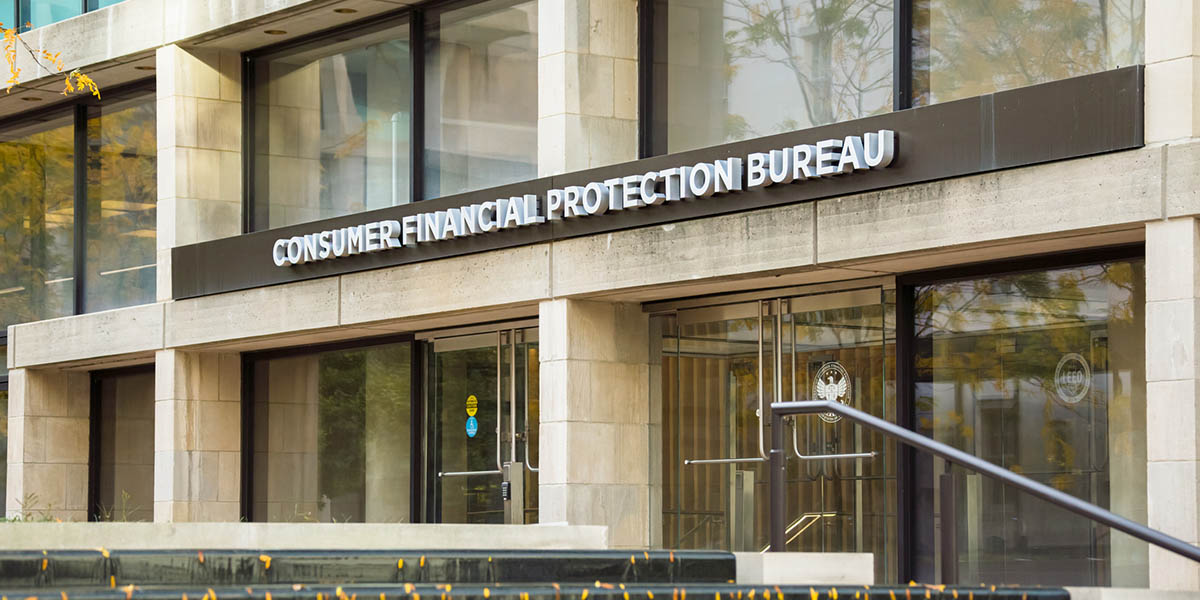
Today, the Consumer Financial Protection Bureau (CFPB or Bureau) published a policy statement in the Federal Register outlining its approach to addressing criminally liable regulatory offenses. This publication comes in response to Executive Order 14294, issued by President Trump on May 9, 2025, which aims to combat overcriminalization in federal regulations.

Today, the U.S. Supreme Court, in a 6-3 decision, ruled that the Medicaid Act’s any-qualified-provider provision does not confer individual rights enforceable under 42 U.S.C. §1983. This decision reverses the Fourth Circuit’s judgment, which affirmed the right of Medicaid beneficiaries to sue state officials for excluding Planned Parenthood from South Carolina’s Medicaid program.

Background