The Fourth Circuit has affirmed a preliminary injunction barring enforcement of West Virginia’s S.B. 325, which sought to restrict how drug manufacturers implement contract pharmacy policies under the federal 340B Drug Pricing Program. In a published decision, the court held that manufacturers are likely to succeed on their claim that S.B. 325 is preempted because it impermissibly rewrites the “bargain” Congress struck with manufacturers under its spending power and interferes with the Health and Human Services’ (HHS) exclusive enforcement role.

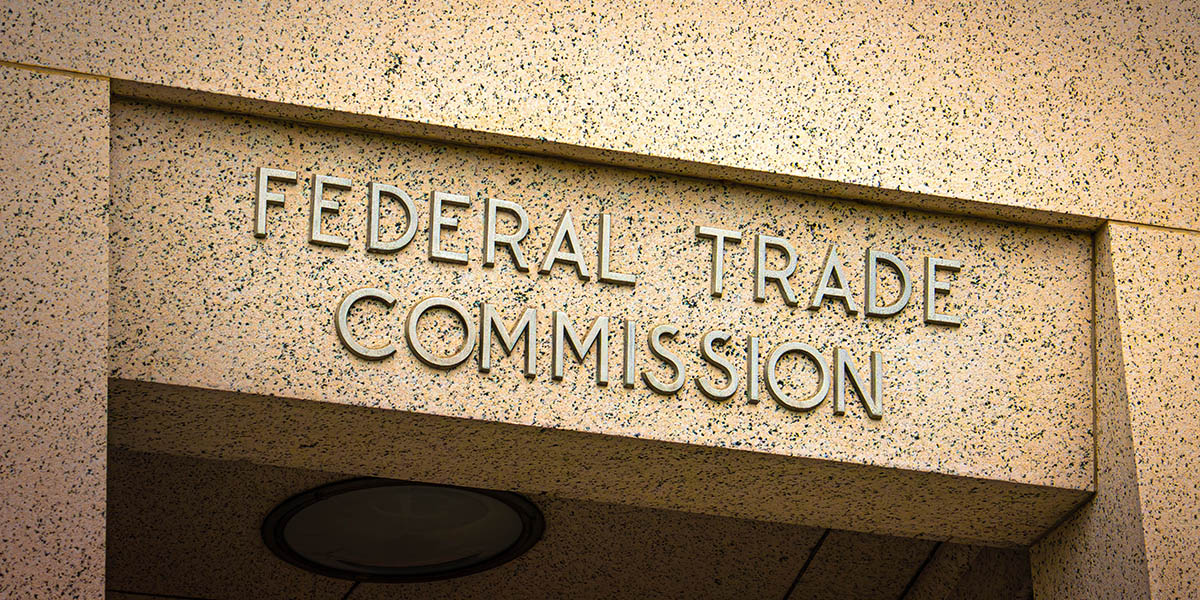
On March 20, Federal Trade Commission (FTC) Chairman Andrew N. Ferguson issued a memorandum directing the creation of an internal Healthcare Task Force. The directive underscores that healthcare remains a top enforcement and policy priority for the FTC, reflecting the Administration’s focus on a “more competitive, innovative, affordable, and higher quality healthcare system.”

A new discussion draft from Representative Bill Huizenga (R-MI) would significantly update Title V of the Gramm‑Leach‑Bliley Act (GLBA) to reflect how financial data is collected, shared, and monetized in today’s market. Released in connection with the March 17, 2026 House Financial Services Committee (Committee) hearing, “Updating America’s Financial Privacy Framework for the 21st Century,” the draft purports to give consumers greater control over their financial data, impose new limits on financial institutions and data aggregators, and create a more uniform national privacy regime for consumer financial information.

On March 13, the Federal Trade Commission (FTC) announced that it is sending warning letters to 97 auto dealership groups across the country, signaling a renewed focus on deceptive pricing practices in the retail auto sector. The letters stress that advertised prices must reflect the total price consumers will be required to pay, including all mandatory, dealer-imposed fees other than government charges like taxes. The agency frames this effort as part of a broader initiative to promote price transparency across sectors such as rental housing, ticketing and hotels, grocery delivery, and now auto sales and leasing.

This article was cited in the April 1, 2026 Multifamily Dive article, “FTC Seeks Public Input on Junk Fee Rule for Rental Housing.”

The Federal Trade Commission has announced an Advance Notice of Proposed Rulemaking (ANPRM) to explore a new rule governing unfair or deceptive rental housing fee practices. The initiative focuses on the widening gap between advertised rent and the total amounts renters actually pay once mandatory fees and charges are added. Once the ANPRM has been published in the Federal Register, comments will be accepted for 30 days. 

On March 11, the Federal Trade Commission (FTC) issued a new Advance Notice of Proposed Rulemaking (ANPRM) to revisit its Rule Concerning the Use of Prenotification Negative Option Plans. The move follows the Eighth Circuit’s 2025 decision vacating the FTC’s 2024 amendments (discussed here), which would have imposed uniform requirements on subscriptions, auto‑renewals, and trial‑to‑pay offers across all marketing channels. The ANPRM makes clear that while the FTC acknowledges that so-called negative options are widely offered and can provide benefits to both sellers and consumers, the FTC intends to address recurring billing and cancellation frictions that continue to generate a high volume of consumer complaints.

The U.S. Department of the Treasury (Treasury) has delivered to Congress the report on Innovative Technologies to Counter Illicit Finance Involving Digital Assets, as required by the Guiding and Establishing National Innovation for U.S. Stablecoins (GENIUS) Act. The report largely reflects the comments Treasury received about how financial institutions (including digital asset service providers (DASPs)) use technologies such as artificial intelligence (AI), digital identity, blockchain analytics, and application programming interfaces (APIs) to detect and disrupt illicit finance involving digital assets, including payment stablecoins. The report highlights many of the challenges and frustrations that institutions are experiencing in trying to adopt these emerging technologies, and promises additional guidance in the future.

On February 11, the National Credit Union Administration (NCUA) released a proposed rule to implement the Guiding and Establishing National Innovation for U.S. Stablecoins Act (the GENIUS Act) for federally insured credit unions (FICUs). Under the proposal, credit unions cannot issue payment stablecoins directly. Instead, only NCUA‑licensed “permitted payment stablecoin issuers” (PPSIs) that are subsidiaries of FICUs would be allowed to issue payment stablecoins, and FICUs would be limited to investing only in PPSIs licensed by the NCUA.

In this episode of The Crypto Exchange, hosts Ethan Ostroff and Genna Garver look back at 2025 — ultimately a pivotal year for digital assets and crypto regulation in the U.S. — drawing on Troutman Pepper Locke’s flagship publication, Financial Services Industry 2025 Digital Assets Year in Review. The report reflects insights from more than 10 of our firm’s practice areas and more than 30 attorneys, offering a comprehensive, cross-practice view of how the regulatory landscape is evolving.

In continuation of increased state efforts to regulate state-chartered banks and fintech partnerships,Oregon’s newly enrolled House Bill (HB) 4116 would enact an express “opt‑out” from a key provision of the Depository Institutions Deregulation and Monetary Control Act of 1980 (DIDMCA) for consumer finance loans made in Oregon. HB 4116 also updates licensing requirements and clarifies when Oregon law applies to remote and online loans. This Oregon development comes on the heels of the Tenth Circuit’s decision in Weiser upholding Colorado’s DIDMCA opt-out and holding that a loan is “made in such State” if either the borrower or lender is located in the opt-out state as discussed here. A petition for rehearing en banc has been filed in Weiser, and it remains unsettled where a loan is “made” for purposes of DIDMCA.