On November 25, the House Financial Services Committee majority staff published Operation Chokepoint 2.0: Biden’s Debanking of Digital Assets, a detailed account of how, in the Committee’s view, federal prudential regulators between 2021 and early 2025 discouraged banks from serving lawful digital asset businesses through informal guidance, supervisory posture, and enforcement.

As reported by Bloomberg, the Democratic Attorneys General Association (DAGA) has hired Rohit Chopra, former Director of the Consumer Financial Protection Bureau (CFPB or Bureau), to lead a new Consumer Protection and Affordability Working Group within DAGA’s policy arm. The move was announced as a coordinated, state-led response to rising living costs and widespread fraud, with a policy agenda that spans financial services, technology, and health care.

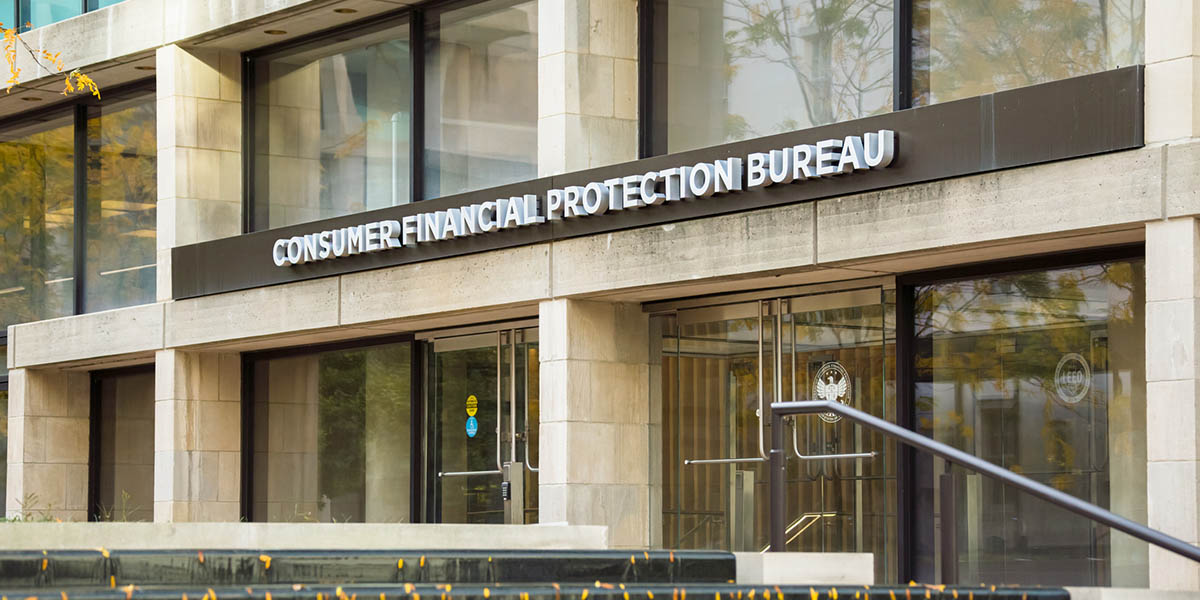
As reported by Law360 on November 20, the Consumer Financial Protection Bureau (CFPB or Bureau) will hand off its remaining enforcement lawsuits and other active litigation to the U.S. Department of Justice (DOJ) as the Bureau prepares for a potential funding lapse. CFPB staff were informed that DOJ will begin assuming matters from the CFPB’s enforcement and legal divisions in the coming weeks, with transfer logistics to be worked out. It remains unclear whether all pending cases will survive the transition or whether case schedules and continuity will be affected.

On November 20, the Illinois Supreme Court narrowly construed private rights of action under the federal Fair Credit Reporting Act (FCRA), creating a de facto “concrete injury” requirement for claims under the FCRA and potentially other federal statutes with similar language authorizing rights of action. Although Article III’s concrete-injury requirement has become familiar in federal courts over the last decade, Illinois courts had not previously imposed such a requirement in cases involving statutory rights of action. The court in Fausett v. Walgreen Co., held that the FCRA does not explicitly authorize consumers to sue for violations, so the law did not authorize consumer lawsuits unless the consumer could show that a violation caused them a concrete injury. This ruling will significantly narrow consumers’ ability to bring no-injury claims under similar statutes in Illinois state courts.

Yesterday, President Trump nominated Stuart Levenbach, an energy official at the Office of Management and Budget (OMB), to serve a five-year term as permanent director of the Consumer Financial Protection Bureau (CFPB or Bureau). Levenbach’s experience is in natural resources and energy policy rather than financial regulation, and he would inherit an agency facing profound uncertainty after months of leadership turmoil, enforcement retrenchment, and dwindling finances.

The Consumer Financial Protection Bureau (CFPB or Bureau) has proposed an unprecedented, far‑reaching rewrite of Regulation B (Reg B) under the Equal Credit Opportunity Act (ECOA). If finalized, the proposed rule would eliminate disparate‑impact liability under ECOA, significantly narrow the scope of “discouragement” to focus on explicit statements directed at applicants or prospective applicants, and prohibit or tightly restrict the use of certain protected‑class criteria in Special Purpose Credit Programs (SPCPs) offered by for‑profit organizations. Existing SPCP‑originated credit would be grandfathered.

Comments are due 30 days after publication in the Federal Register, with a proposed effective date 90 days after publication.