To keep you informed of recent activities, below are several of the most significant federal and state events that have influenced the Consumer Financial Services industry over the past week:


To keep you informed of recent activities, below are several of the most significant federal and state events that have influenced the Consumer Financial Services industry over the past week:

As discussed here, on February 3, 2023, an Illinois federal court dismissed a case brought by the Consumer Financial Protection Bureau (CFPB or Bureau) in 2020 against Townstone Financial, Inc., a Chicago mortgage lender, for alleged violations of the Equal Credit Opportunity Act (ECOA). The CFPB had accused Townstone of discouraging prospective African American applicants in the Chicago metropolitan area from applying for mortgages.
To keep you informed of recent activities, below are several of the most significant federal and state events that have influenced the Consumer Financial Services industry over the past week:
To keep you informed of recent activities, below are several of the most significant federal and state events that have influenced the Consumer Financial Services industry over the past week:
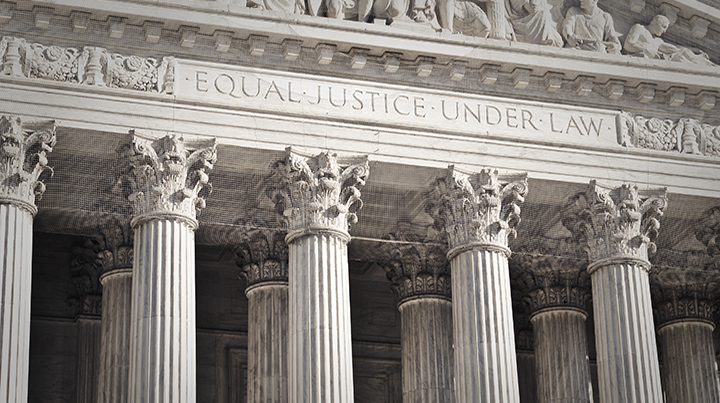
Today, the U.S. Supreme Court issued a landmark decision in Loper Bright Enterprises v. Raimondo overruling the Chevron doctrine. This decision marks a watershed moment in administrative law, fundamentally altering the landscape for judicial review of agency actions under the Administrative Procedure Act (APA).
To keep you informed of recent activities, below are several of the most significant federal and state events that have influenced the Consumer Financial Services industry over the past week:

On June 18, a Colorado federal court granted the plaintiff trade groups’ motion for a preliminary injunction, effectively halting the enforcement of Colorado’s H.B. 1229 with respect to loans made by out-of-state state-chartered banks.
To keep you informed of recent activities, below are several of the most significant federal and state events that have influenced the Consumer Financial Services industry over the past week:

Today, the Consumer Financial Protection Bureau (CFPB or Bureau) released a report on the state of negative equity in auto lending. The CFPB says it found that financing negative equity creates increased risks for consumers, and states that the CFPB will be putting negative equity under scrutiny.
To keep you informed of recent activities, below are several of the most significant federal and state events that have influenced the Consumer Financial Services industry over the past week: