
In the world of background check litigation under the Fair Credit Reporting Act (“FCRA”), one theory that plaintiffs frequently assert is that if the background check disclosure provided by the employer violates the FCRA, then the authorization based on that disclosure is also necessarily inadequate. Under the FCRA, an employer desiring to obtain a criminal

FTC Submits Annual Budget Request To Congress
The Federal Trade Commission (FTC) submitted its Fiscal Year 2018 budget request to Congress, in support of the President’s FY 2018 budget for the federal government. The budget request also includes the FY 2018 Budget Overview Statement, Performance Plan for FY 2017 and FY 2018, and Performance Report for FY 2016, as required under the
TCPA Is Not Dead Yet – Court Trebles Eight Figure TCPA Award While World Awaits ACA Decision
While the world eagerly awaits the D.C. Circuit’s forthcoming ruling on the proper interpretation of the Telephone Consumer Protection Act (TCPA), a recent federal court ruling imposing tens of millions of dollars of liability is a reminder of the risks associated with outbound calling activities and of the stakes at play in the ACA International
Pennsylvania to “Ban the Box” by Executive Order
Pennsylvania Governor Tom Wolf announced this month that he will “ban the box” for some applicants applying for certain state government positions, and that he will do so by executive order, which would take effect as of July 1, 2017. The executive order would affect hiring in nearly 70,000 state jobs within the executive branch
Favorable Decision Rendered in “Current Account Balance” Case
On May 18, the Southern District of New York rendered a long–awaited opinion on “current account balance” cases, holding that current balances referenced in collection letters, with no mention of accruing interest or fees, do not violate Section 1692e of the Fair Debt C
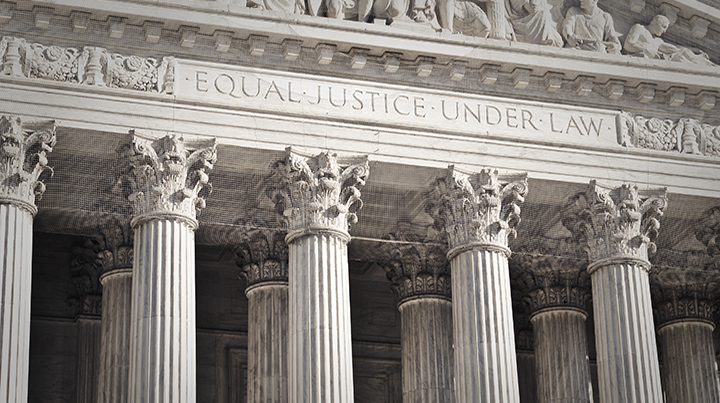
Supreme Court Rules That Filing a Proof of Claim on a Time-Barred Debt Does Not Violate the FDCPA
On May 15, 2017, the United States Supreme Court ruled that the Eleventh Circuit erred when it found a debt buyer liable under the Fair Debt Collection Practices Act for filing proofs of claim in bankruptcy on debts that had become time-barred. A copy of the Court’s opinion can be found here.
Background
In
U.S. Supreme Court Scoffs at Kentucky Supreme Court’s Decision to Disregard Federal Arbitration Act
On May 15, the United States Supreme Court reversed and remanded a state court decision that invalidated an arbitration agreement. In a visceral 7-1 decision, the Supreme Court sent a clear message to Kentucky that the state cannot circumvent the Federal Arbitration Act (“FAA”) merely because the court does not like arbitration clauses.
In Kindred

Spokeo Strikes Again: Fourth Circuit Reverses and Dismisses $12 Million FCRA Class Action on Spokeo Grounds
In one of the most significant post-Spokeo decisions to date, the Fourth Circuit unanimously reversed and dismissed a nearly $12 million Fair Credit Reporting Act (“FCRA”) class action judgment, finding plaintiff, Michael T. Dreher, lacked Article III standing to bring his claims. The decision provides much needed clarity from the Fourth Circuit on the
Court Rejects Bona Fide Error Defense for Collector Who Failed to Maintain Policies and Procedures
On May 8, an Arizona federal judge held that a defendant debt collector was not entitled to a “bona fide error” defense in a claim brought under the Fair Debt Collection Practices Act because the collector failed to show it had either a policy or procedure in force to address the specific error in the
FTC Issues Guidance for Employment Background Screening
On April 28, the Federal Trade Commission published a blog entitled “Background Checks on Prospective Employees: Keep Required Disclosures Simple.” In this online publication, the FTC issued guidance to employers on how to comply with the Fair Credit Reporting Act if they intend to use a consumer report (commonly referred to as a background check)